




Lace Blossom: The Art of Botanical Ornament
Dusty lilac, dark foliage and the enduring beauty of decorative pattern.
There is a tendency to associate floral patterns with softness, romance and delicate color. But some of the most interesting botanical designs emerge from the tension between delicacy and strength.
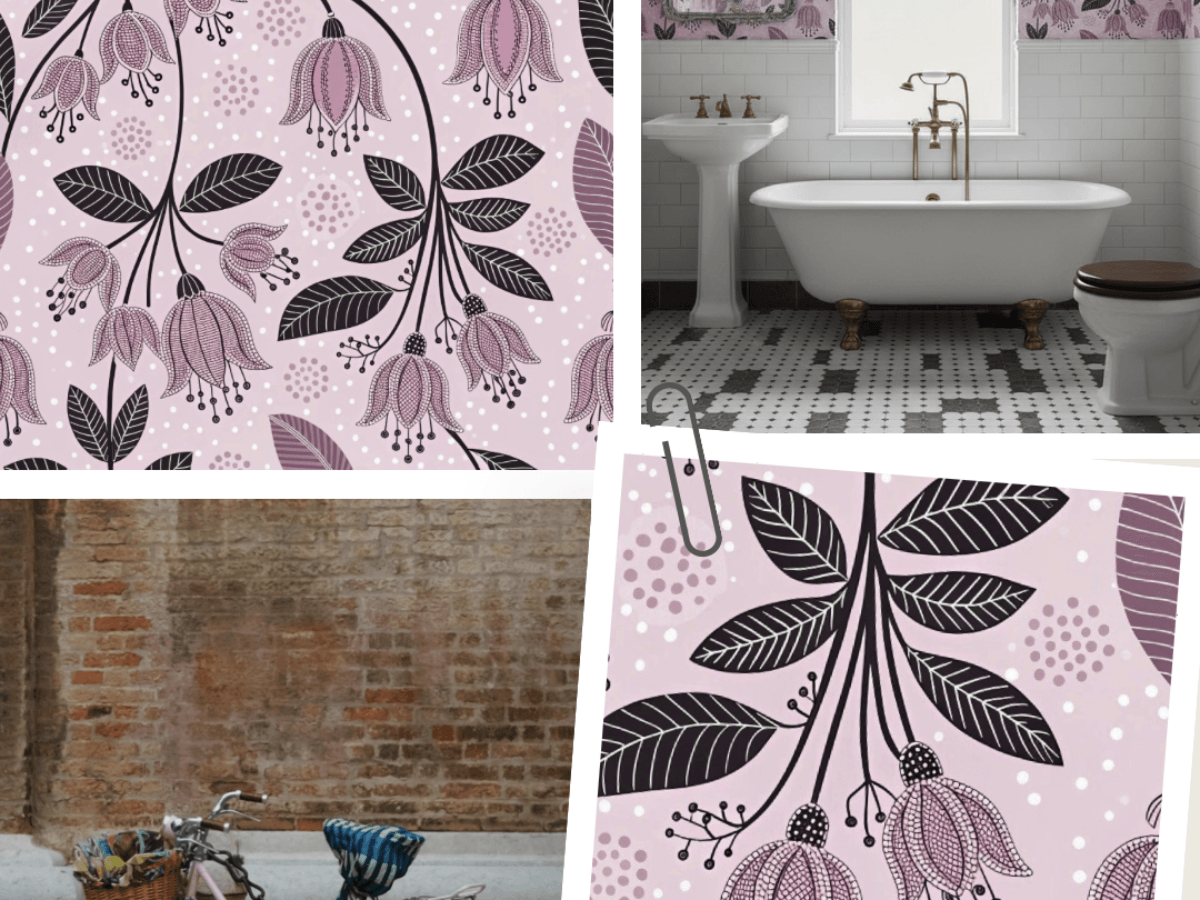
Lace Blossom explores that relationship through hanging bellflowers, intricately detailed charcoal leaves and a soft dusty lilac ground.
The flowers are delicate. The foliage is decidedly not.
And that is precisely what gives the pattern its character.
Finding Balance in Botanical Design
A successful repeating pattern requires more than an attractive collection of individual motifs. It needs rhythm, structure and a considered relationship between ornament and open space.
In Lace Blossom, the dark stems and leaves provide the visual framework. The suspended blossoms introduce a graceful downward movement, while small dotted clusters bring texture to the spaces between the larger botanical forms.
Look closely at the flowers and you'll discover a network of fine, lace-like details. Step back, and those individual elements become part of a larger decorative rhythm.
That shift between detail and overall composition is one of the pleasures of surface pattern design.
A Little Heritage, a Little Modernity
I've always been drawn to the decorative language of historical textiles, Scandinavian folk art, the Arts and Crafts movement and the ornamental traditions of the late nineteenth and early twentieth centuries.
These traditions demonstrate how natural forms can be simplified, stylized and arranged into something that is not quite illustration and not quite abstraction.
A leaf becomes a structural element. A flower becomes a repeated motif. The spaces between them become as important as the forms themselves.
Although Lace Blossom is a digital design, its visual language shares something with traditional printmaking: an appreciation for strong lines, deliberate contrast, repetition and negative space.
The dusty lilac palette introduces a contemporary softness to that heritage-inspired decorative vocabulary.
Living With Botanical Pattern
Not every interior needs to be a study in beige.
There is room for ornament, personality and a little visual intrigue, even in spaces designed to feel calm and restorative.
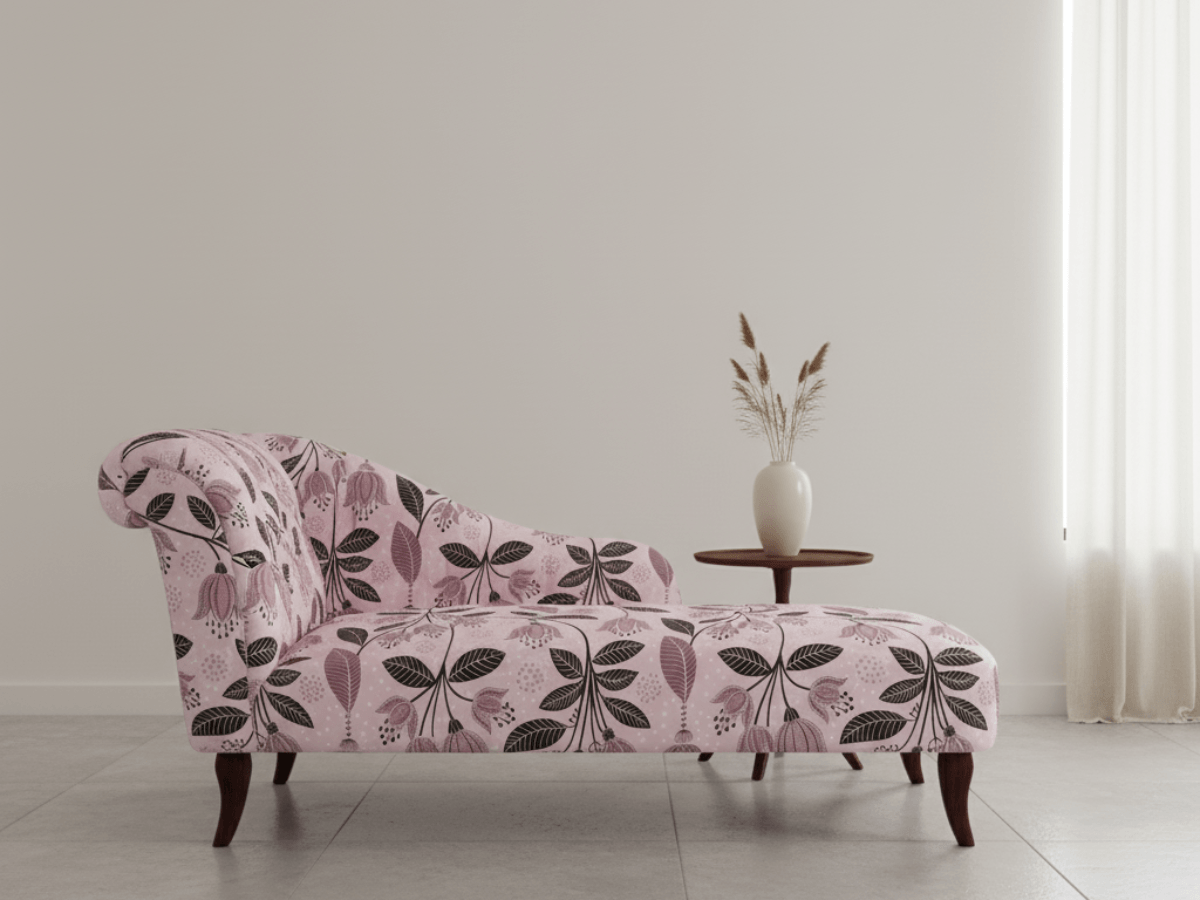
Lace Blossom lends itself particularly well to layered botanical interiors, where natural materials, collected objects and decorative textiles create a sense of individuality.
Its palette works beautifully alongside:
Natural linen and warm ivory
Pale oak and darker vintage timber
Muted sage and olive green
Dusty mauve and soft plum
Aged brass and charcoal accents
In a bedroom, the pattern could introduce a gentle romantic quality without becoming overly feminine. In a reading corner, a patterned cushion could provide a decorative counterpoint to natural upholstery and wooden furniture.
As a wallpaper concept, its repeating botanical structure offers a more immersive interpretation of the design.
The key is allowing the pattern enough space to breathe.
Let us know what you think in the comments!
Newsletter
Subscribe to the newsletter and stay in the loop! By joining, you acknowledge that you'll receive our newsletter and can opt-out anytime hassle-free.
Created with ©systeme.io